
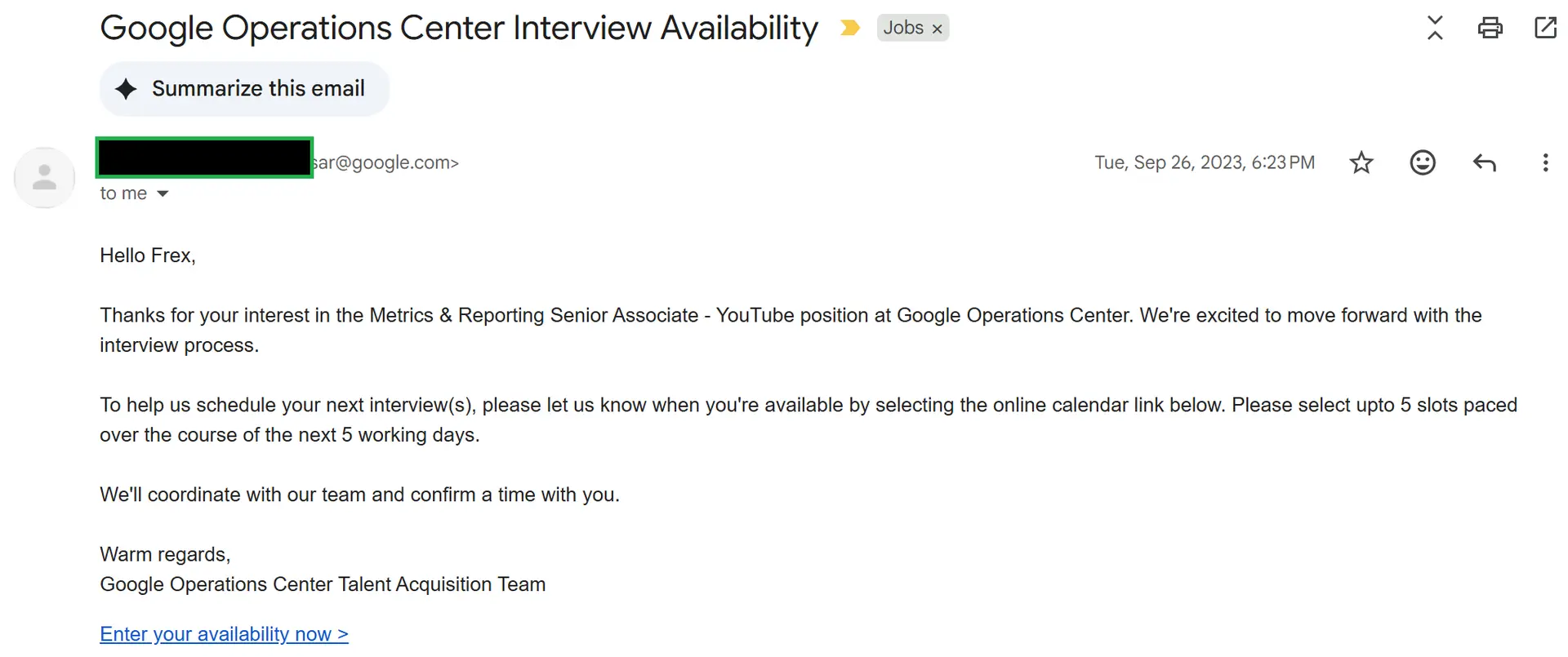
Two years ago, I was on the lookout for a new role and sent my resume to several companies, eventually losing track of my applications. Fast forward to September 2023, and I received an unexpected email from Google Operations Center (GOC) inviting me for an initial interview. It felt surreal, a part of the company I had long admired was reaching out, turning my long-forgotten application into an incredible opportunity to explore a role in Google’s operational team.
Google Operations Center (GOC) is part of Google’s global infrastructure and operations network.
Its primary role is to support Google’s services, systems, and users, including monitoring systems, managing operational processes, and sometimes providing customer or technical support depending on the team.
Unlike the main Google headquarters (focused on product development, engineering, and corporate strategy), GOC focuses on operations, reliability, and keeping Google services running smoothly.
Before the Interview
At that moment, I froze for a few seconds, reread the message, and smiled in disbelief. It felt surreal. I’ve always admired Google for its innovation and culture, and now I had the chance to experience their hiring process firsthand.
What surprised me even more was that Google provided an interview preparation guide in advance. It wasn’t just a generic checklist, it was a thoughtful guide meant to help candidates perform at their best. It made one thing clear: Google doesn’t want you to stumble; they want you to succeed.
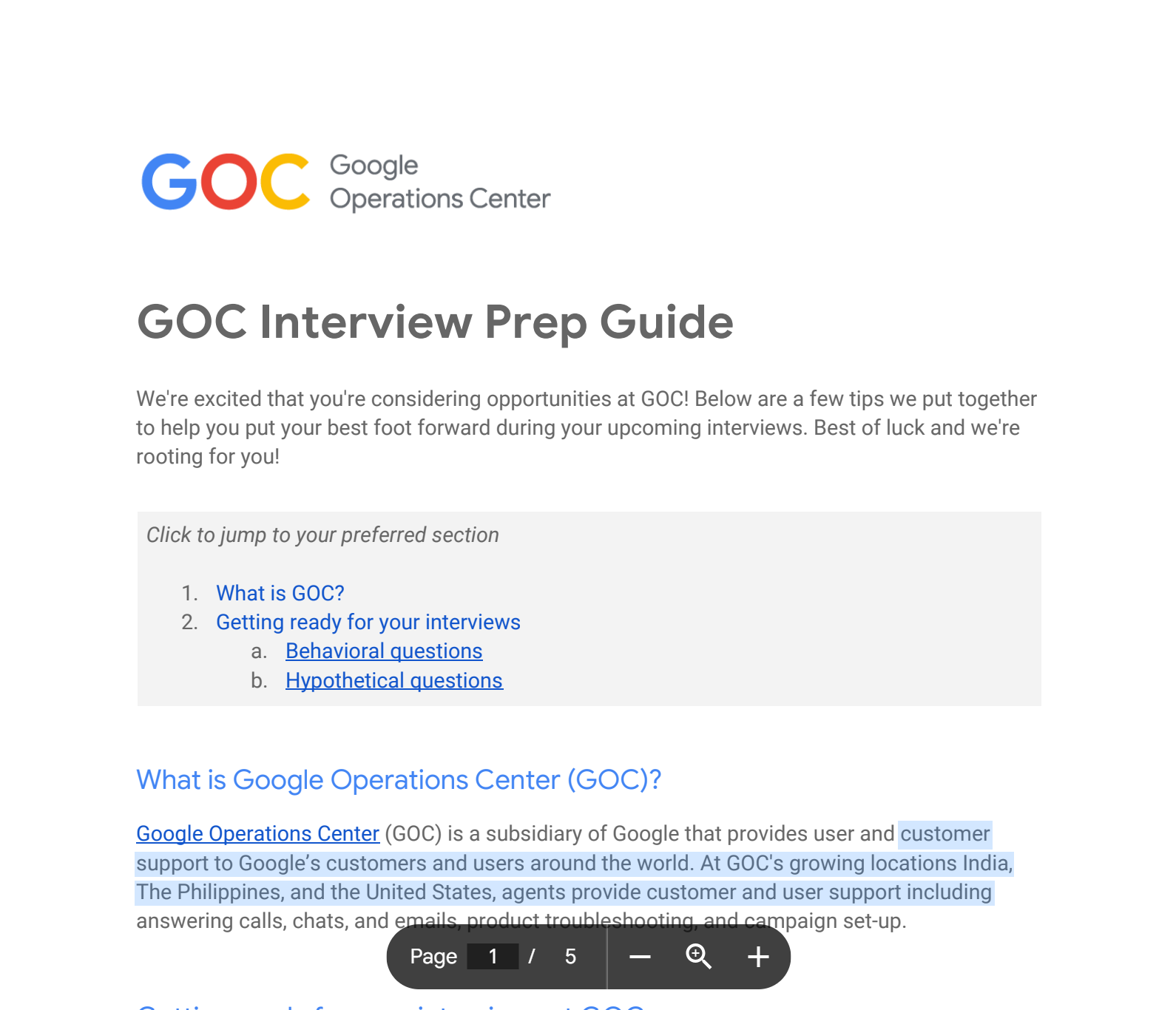
The interview was categorized into two parts: behavioral questions and hypothetical questions.
Here’s what the guide emphasized:
“To get ready for your interview, read through the entire job description and make sure you have an understanding of what could be expected in the role.”
It also reminded candidates of a few key points to keep in mind:
Be yourself. Let your passion for the role shine.
Listen carefully and be concise.
Think in terms of examples that showcase your top strengths.
Don’t worry about giving the right answer, focus on showing your thought process.
Come prepared with thoughtful questions to demonstrate genuine curiosity.
Reading through that guide felt reassuring. It wasn’t about passing or failing; it was about authentic communication and mutual discovery, understanding if you and Google were the right fit for each other.
During the Interview
During my interview at Google Operations Center, the questions were divided into two types: behavioral and hypothetical.
Behavioral questions focused on my past experiences, such as:
“Tell me about a time when you failed?”
“Tell me about a time when you failed to meet a deadline. What did you fail to do? What did you learn?”
“Tell me about a time when you led a team?”
“Tell me about a time when you communicated effectively?”
“Why are you looking for a job outside your current company?”
These questions helped the interviewers understand how I had handled real situations and what I learned from them.
Hypothetical questions ask you to imagine a scenario and explain your approach. One relevant example for a GOC role is:
“How would you handle a situation where a team member missed a crucial step in a process that could delay operations?”
This type of question assesses problem-solving, decision-making, and ability to think on your feet, rather than recalling past events. Including both behavioral and hypothetical questions in interviews helps companies like Google understand not just what you’ve done, but how you would act in future scenarios.
After the Interview & Lessons Learned
After the interview, I learned that I did not advance to the second round. At first, it felt a little disappointing, but upon reflection, I realized how valuable the experience itself was.
Being interviewed by Google wasn’t just about getting the job, it was about testing my mindset, communication skills, and ability to think under pressure. I gained insight into how top tech companies evaluate talent, and more importantly, I learned how to present my experiences and strengths more clearly.
One exciting takeaway was that I was encouraged to join Google’s Kickstart program, a global online coding competition designed to help students and professionals practice and enhance their programming skills while competing with peers worldwide. Even though I didn’t move forward in the interview, Google provided a path to further develop my skills and prepare for future opportunities. That gesture reinforced their approach: they don’t just assess candidates; they want to help you grow.
Here are a few lessons I took away from the process:
Preparation matters, but being authentic matters more. Google’s guide emphasized this, and it truly shaped how I approached the questions.
Failure is a stepping stone, not a dead end. Even if you don’t make it to the next round, the experience teaches you what to improve.
Reflection is key. Thinking critically about your answers and your approach to problems helps you grow far beyond a single interview.
Confidence and curiosity go hand in hand. Showing genuine interest and asking thoughtful questions leaves a lasting impression.
Overall, the Google interview was an amazing experience, and I am grateful for the opportunity. It reminded me that every challenge, regardless of the outcome, is a chance to learn, grow, and prepare for what’s next.
#CareerAdvice #CareerInspiration #GrowthMindset #LessonsLearned #NeverStopLearning #Google #GoogleOperationsCenter #TechCareers #TechInterview #TechJobs #GoogleKickstart